Solid-state batteries explained: the holy grail is entering production – slowly
Semi-solid cells are already commercial and Saft has opened solid-state lines in France, but all-solid-state batteries for mass-market cars are still years away.
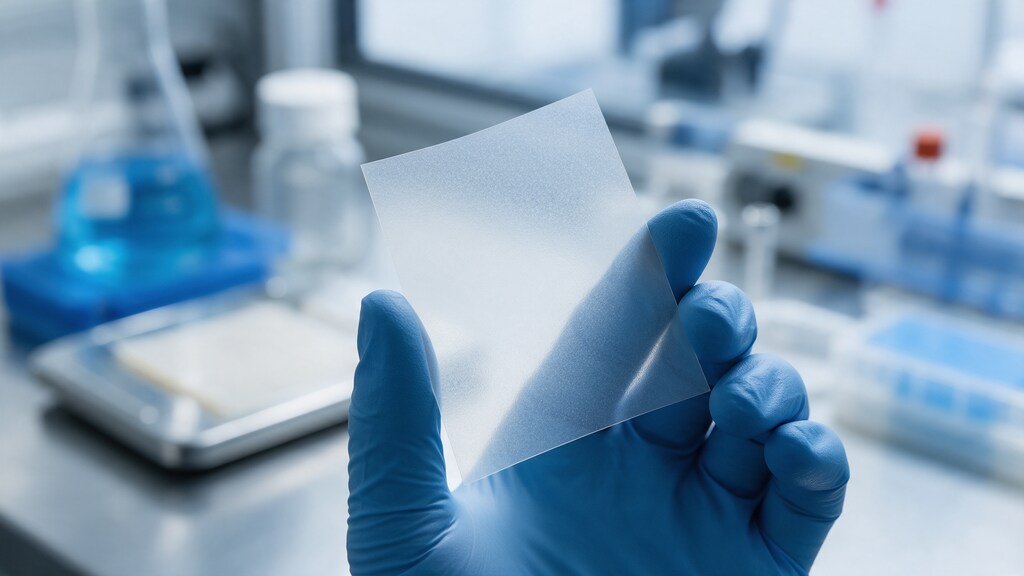
A solid-state battery replaces the flammable liquid electrolyte of a lithium-ion cell with a solid material – a ceramic, a sulphide or a polymer. The promise is a safer cell that can also use more energy-dense electrodes. The reality in 2026 is a staged roll-out, not a sudden revolution.
Three steps on the way to "solid"
The IEA distinguishes between semi-solid-state batteries, which are already commercial, and "almost-solid" and all-solid-state designs, which are still at the prototype stage. It also notes that the advantages of solid-state batteries have not yet been demonstrated in real-world applications.1
Who is producing what
In October 2026 Saft, a TotalEnergies subsidiary, inaugurated solid-state production lines at its Bordeaux plant. The lines can make polymer-based semi-solid-state cells and sulphide-based solid-state cells, with energy density said to be up to 50% higher than conventional lithium-ion. Saft uses a dry-electrode process, which it expects to cut production CO₂ emissions by up to 40%. Its first focus is aerospace, and it has already delivered semi-solid cells to Safran.2
For cars, the timelines are longer: BYD plans its first all-solid-state EV from 2027 and mass production from 2030, while Toyota plans its first all-solid-state vehicle by 2028.1
Why it is hard
In a solid cell the electrolyte cannot flow to fill gaps, so it has to stay in contact with electrodes that swell and shrink as the battery charges and discharges – and all of this has to work in mass production, not just in a lab cell. The IEA expects solid-state batteries to remain limited to premium segments until the first half of the 2030s.1
What to watch: the first all-solid-state cars from BYD and Toyota – their range, charging speed and price will show whether the lab promises survive mass production.
What it means for Central & Eastern Europe
There is no solid-state cell production in our directory yet. For the region's existing lithium-ion plants and their suppliers, the IEA's timeline suggests conventional and semi-solid cells will dominate for the rest of this decade, while dry-electrode processes like Saft's are worth following as a possible change in equipment needs. Compare chemistries in our solid-state technology guide.
Sources
-
Global EV Outlook 2026 – Electric vehicle batteries – IEA, 2026 ↩↩↩
-
TotalEnergies subsidiary Saft manufactures solid-state batteries in Bordeaux – electrive, 19 Oct 2026 ↩