The EU battery passport explained: what changes on 18 February 2027
From February 2027 EV, light-vehicle and larger industrial batteries sold in the EU need a digital passport with a QR code – here is what it contains, who can see it and what it costs.
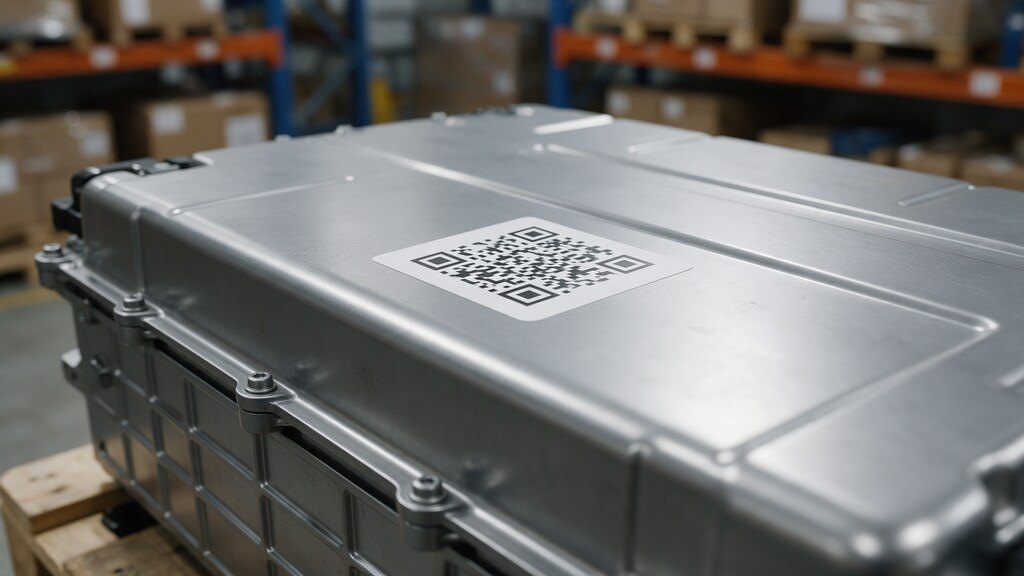
The EU Battery Regulation turns batteries into traceable products. Its most visible tool is the battery passport: an electronic record, reached through a QR code on the battery, that follows each unit from production to recycling.
Who needs a passport – and when
The obligation starts on 18 February 2027. It covers batteries for electric vehicles, light means of transport such as e-bikes and e-scooters, and industrial batteries above 2 kWh; portable and starter (SLI) batteries are excluded.1 From that date, covered batteries must carry a QR code linked to the electronic record.1
What is inside
The passport has two layers.1
- Model-level data: manufacturer, chemistry, material composition, carbon footprint, recycled content, the due diligence report, performance parameters, and information on dismantling, repair and recycling.
- Data on the individual battery, updated during use: state of health, status, cycle count, state of charge, accidents and operating conditions.
Most model-level information is public. Restricted data and individual battery data are available to persons with a legitimate interest, and compliance test reports to notified bodies, market surveillance authorities and the Commission.1
The wider regulation behind it
The passport sits within a longer timeline. Supply-chain due diligence obligations start on 18 August 2027, with verification by a notified body.2 Minimum recycled content for cobalt, lead, lithium and nickel applies to industrial, EV and certain automotive batteries from August 2031.2 The regulation's initial recycled-content levels are 16% for cobalt, 85% for lead and 6% each for lithium and nickel, and it sets lithium recovery targets from waste batteries of 50% by the end of 2027 and 80% by the end of 2031.3
What it costs – and the debate about timing
Much of the compliance effort is fixed – carbon footprint declarations, due diligence and per-unit passport records – so low-volume producers carry a higher cost per kWh. Serbian LFP cell maker ElevenEs argues that this disadvantages Europe's still-small producers and that the 2027 date should be moved while keeping the passport. It also notes that the implementing act defining legitimate-interest access had not been finalised by July 2026.1
What to watch: the final rules on who may access individual battery data – they decide how useful the passport will be for recyclers, second-life operators and fleet buyers.
What it means for Central & Eastern Europe
The region hosts large cell plants, cathode materials production and recyclers – all of which will feed data into, or rely on, battery passports. For recyclers and second-life operators, access to state-of-health data could become a practical advantage. See the cell makers, materials companies and recyclers in our directory.
Sources
-
The EU battery passport: what it requires, who benefits, who pays – ElevenEs, Jul 2026 ↩↩↩↩↩
-
EU Sustainable Batteries Regulation – Baker McKenzie, updated 1 Jan 2026 ↩↩
-
EU Council adopts new regulation on batteries and waste batteries – Waste Management World, 11 Jul 2023 ↩