Batteries now beat gas peakers on cost – Poland's capacity market still points the other way
Wood Mackenzie finds four-hour storage cheaper than gas peaking plants in every market it modelled, but Poland's capacity auction rules decide what actually gets built.
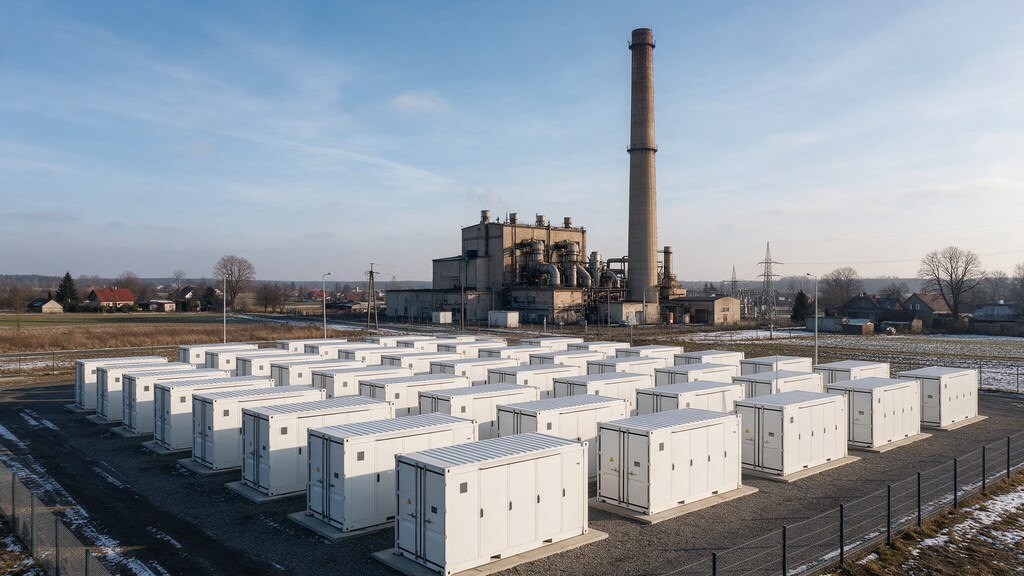
What happened
Wood Mackenzie's latest global cost study finds four-hour battery storage cheaper than open-cycle gas turbines in all 43 markets where both were modelled. In Europe, turnkey battery capex rose about 2% this year as cell prices rebounded, but is still forecast to fall 12% by 2031.1
Why it matters for CEE
Cost is only half the story in Poland. In the December 2025 capacity auction for delivery in 2030, the de-rating factor for batteries was cut to around 13%, down from 60% a year earlier. Battery awards fell to roughly 685 MW of obligations, from 2.5 GW in the 2024 auction, while gas won around 2,400 MW.2 The government had already signalled that it wanted auctions in which gas plants could win.3
For developers in Poland this suggests that cheaper batteries alone will not restore capacity-market revenue. Projects increasingly have to earn their keep from trading and balancing services rather than from a fixed capacity payment.
What to watch
Whether next year's auction parameters change the battery de-rating factor – that number, more than global cost curves, will set the pace of Polish storage build-out.
Sources
-
Four-hour battery storage now beats gas peaking on cost globally – Wood Mackenzie, 8 Oct 2026 ↩
-
BESS wins in Poland capacity market falls for the first time, de-rating cut to blame – Energy-Storage.news, 19 Dec 2025 ↩
-
Poland capacity market: more winning BESS revealed as government looks to give gas another chance – Energy-Storage.news, 30 Jan 2025 ↩