Germany cuts e-bus funding by two-thirds – a demand test for Poland's bus factories
Berlin's 2027 budget cuts federal e-bus support to €130 million, a key export market for Polish-built Solaris and MAN electric buses.
What happened
Germany's 2027 federal budget cuts funding for electric buses to €130 million, from €403 million in 2026. Transport operators' association VDV warns that up to 7,200 e-buses could go unfunded compared with an expanded-funding scenario, and a PwC analysis expects about 1,500 fewer electric buses by 2030 than if 2026 funding had been kept.1
Why it matters for CEE
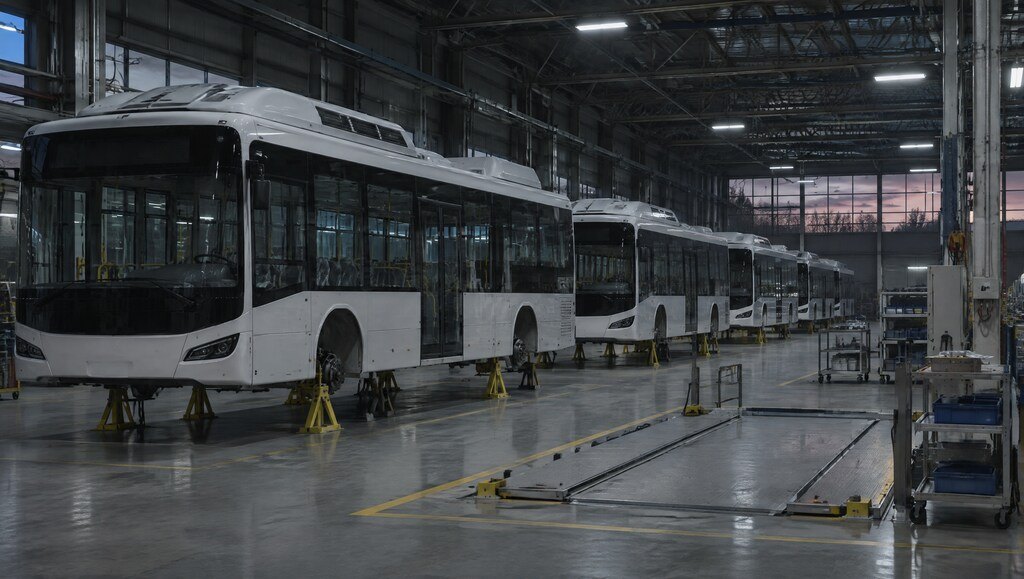
Poland builds electric buses for the German market. All Solaris buses are produced there; in 2025 the company delivered 916 battery buses, and Germany was one of its main markets alongside Poland and Italy.2 MAN has built its Lion's City E in Starachowice since 2020, though it added series production in Ankara, Turkey, this spring.3 At home, demand is strong: Poland registered 1,060 battery-electric buses in the first half of 2026, up from 148 a year earlier and well ahead of Germany's 553.4
For Polish e-bus plants, this suggests German orders could slow from 2027. The busy home market may cushion that, but only as long as Polish cities keep tendering at the current pace.
What to watch
How fast German operators apply under the new programme, which targets at least 1,500 additional e-buses.1
Sources
-
Germany's e-bus funding cuts confirmed for 2027: VDV warns of financing gap for up to 7,200 buses – Sustainable Bus, 17 Nov 2026 ↩↩
-
Solaris summarises 2025: sales growth, strong position in e-mobility, and expansion into new markets – Solaris Bus & Coach, 13 Mar 2026 ↩
-
MAN startet Produktion des Lion's City E in Ankara – electrive.net, 2 Apr 2026 ↩
-
Europe registers 8,141 electric buses in H1 2026, growing +49%: Yutong first, Iveco takes second place with 1,156 units – Sustainable Bus, 31 Aug 2026 ↩